Best International Calling Apps in 2026 (Comparison)
A concise comparison of the best international calling apps in 2026 for calling overseas mobiles and landlines.

Ronak Lakhotia
International calling apps let you call overseas mobile numbers and landlines over the internet, usually at lower rates than standard carrier plans. They are useful when WhatsApp, FaceTime, or Signal will not work because the other person does not use the same app, or when you need to call a landline abroad.
This guide compares the best international calling apps in 2026 by call quality, landline support, pricing model, app download requirements, and best use case.
Best International Calling Apps: Quick Comparison
| App | Best For | Calls Mobiles & Landlines | App Download | Key Reason |
|---|---|---|---|---|
| HelloAirDial | Browser-based international calls | Yes | No | Calls from a browser without installing an app |
| Viber Out | Existing Viber users | Yes | Yes | Convenient if you already use Viber |
| Google Voice | US users needing a second number | Yes | Yes | Strong voicemail, spam filtering, and US-number features |
| Yolla | Budget-conscious callers | Yes | Yes | Shows rate previews before calling |
| Rebtel | Weak or unstable internet | Yes | Yes | Can route calls through local phone lines in supported markets |
| Talk360 | Calls to African countries | Yes | Yes | Focuses on routes and payment methods for African destinations |
How We Compared the Apps
We prioritized practical calling needs over generic app-store popularity:
- Real phone number support: Each app must be able to call mobile numbers and landlines, not only other app users.
- Setup effort: We favored services that make it easy to place a call without unnecessary downloads, permissions, or setup steps.
- Pricing clarity: We looked for simple per-minute pricing and called out hidden costs where they matter.
- Best use case: We matched each app to the situation where it is strongest.
- User feedback: We reviewed public Reddit discussions and Trustpilot pages where available.
 HelloAirDial
Browser-based international calling app
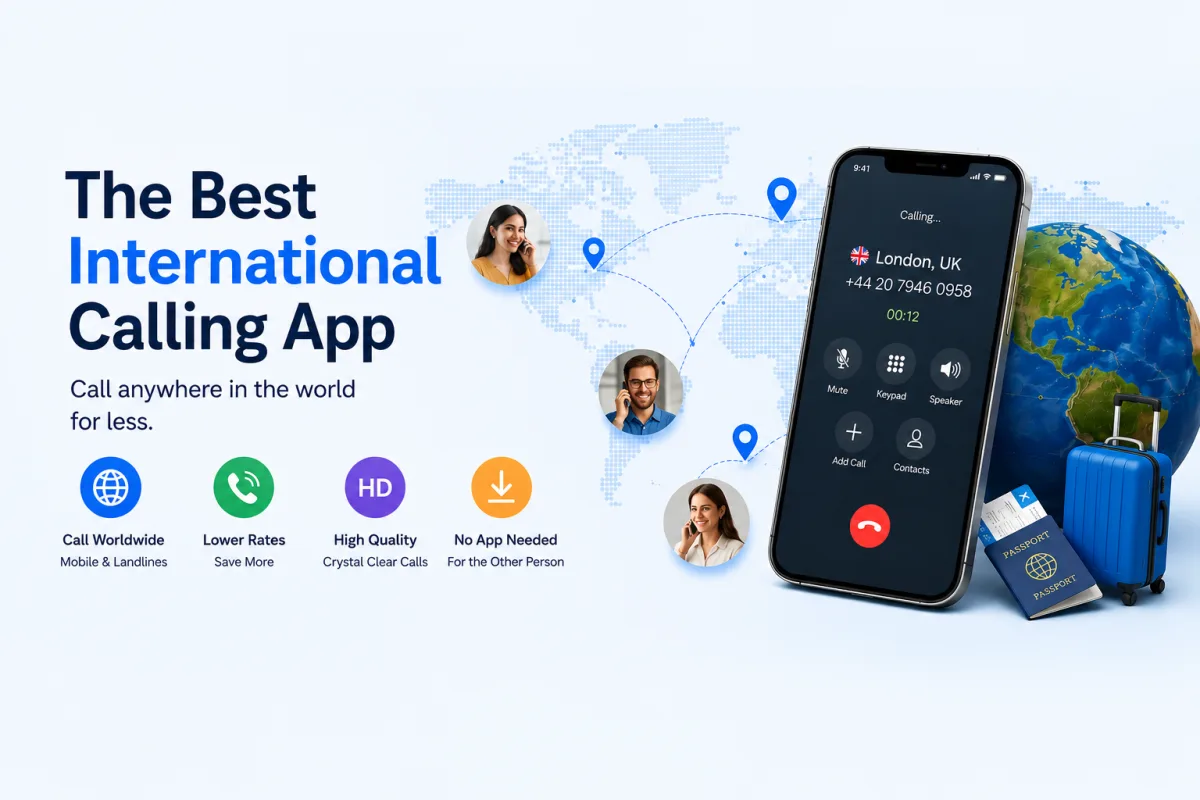
HelloAirDial is a dialer that operates entirely within a web browser using WebRTC (Web Real-Time Communication). It differs from the other apps on this list because it does not require a standalone app download, which makes it useful for people who want to call from a browser on any device.
App Features:
- Go to the HelloAirDial website.
- Create a free account.
- Enter the international number you want to call.
- Start the call from your browser.
Pricing: HelloAirDial uses pay-as-you-go pricing. Rates vary by destination, so check the HelloAirDial rates page before placing a call.
Pros:
- Start calling without an existing SIM or phone number.
- Set up team plans for business calling and higher call volume.
- Receive incoming calls on your virtual number.
- Uses transparent per-minute billing without subscriptions.
- Offers virtual numbers in the US and Canada.
- Includes business features like call recordings and shared team credits.
Cons:
- Requires a stable internet connection.
- Does not include social features like chat, stickers, or file sharing.
Best For: Casual users who prefer browser-based simplicity and professionals who need a cheap dialer for cold calling without installing dedicated software.
Check HelloAirDial Rates | Check Features | Visit Homepage
 Viber (Viber Out)
Best for existing Viber users
Viber is a messaging app that also offers paid calls to mobile numbers and landlines through Viber Out. It is a practical option if you already use Viber and want international calling inside the same app.
App Features: Viber includes messaging, app-to-app calls, and paid Viber Out calls. The trade-off is that the app includes social features and ads, which may feel unnecessary if you only want a simple phone dialer.
Pricing: Viber Out supports both prepaid credit and monthly plans. Pricing depends on the country you call, and Viber lists current rates in its Viber Out rates index.
Pros:
- Keeps messaging and paid calls in one app.
- Offers unlimited plans for some countries.
- Can show your mobile number as caller ID.
Cons:
- Includes messaging and social features that may be unnecessary for simple calling.
- The free version contains ads.
- Rates can be higher than dedicated VoIP apps on some routes.
Best For: Existing Viber users who want to consolidate their communication tools.
User Reviews: ⭐ Trustpilot |  Reddit | Reddit
 Google Voice
Best for US users who need a second number
Google Voice gives users a US phone number for calls, voicemail, and basic call management. It works best for people in the US who want a second number rather than a simple pay-as-you-go international calling app.
App Features: Google Voice includes voicemail transcription, spam filtering, and call forwarding across devices. The main limitation is availability, especially for personal accounts outside the US.
Pricing: Google Voice uses pay-as-you-go pricing for international calls. Rates depend on the destination, and Google publishes them on its Google Voice calling rates page.
Pros:
- Gives you a dedicated +1 number for incoming and outgoing calls.
- Transcribes voicemails into text.
- Helps block unwanted calls.
Cons:
- Difficult to use if you are outside the US.
- Requires an existing US phone number for setup.
- Support options are limited for free accounts.
Best For: US residents needing a second line for business or privacy. If you are based in the UK or Canada, Google Voice is not available — see our guides on the best alternatives for each country.
User Reviews: ⭐ Trustpilot | Reddit | Reddit
 Yolla
Yolla
Best prepaid app with SMS and mobile top-ups
Yolla is a prepaid international calling app for iOS and Android. You can use it to call mobile numbers and landlines. It also supports free calls between Yolla users, international SMS, and mobile top-ups.
App Features: Yolla can show your existing phone number as caller ID, which is useful when calling people who need to recognize you. It also supports international SMS and mobile top-ups, so it works as more than a basic calling app.
Pricing: Yolla uses prepaid pay-as-you-go pricing. Its US rates page says international call rates start from $0.04/min, with the exact rate shown before you call.
Pros:
- Supports paid calls to mobiles and landlines.
- Includes international SMS and mobile top-ups.
- Supports free calls between Yolla users.
Cons:
- Some routes may include extra fees.
- Some users report issues receiving verification SMS during setup.
Best For: Users who want prepaid international calling with clear rates before each call.
User Reviews: ⭐ Trustpilot | Reddit | Reddit
 Rebtel
Best for weak internet connections
Rebtel is useful when your internet connection is unreliable. In supported markets, it can route international calls through local phone lines instead of relying only on mobile data.
App Features: Rebtel lets you choose how calls connect: WiFi, mobile data, or local phone lines where available. It also supports free calls and instant messages between Rebtel users. Its Global Unlimited plan covers calls to mobiles and landlines in 50 countries, but it is meant for personal use rather than business calling.
Pricing: Rebtel offers subscriptions, minute bundles, and pay-as-you-go calling minutes. Current destination rates are listed on the Rebtel rates page.
Pros:
- Can work without active data in supported markets by using cellular voice minutes.
- Offers bundles for frequent callers.
- Also supports sending mobile top-ups.
Cons:
- Some Trustpilot reviewers report difficulty reaching support and getting clear help from customer service.
- Reviews also mention call connection problems and credit being used when calls do not connect successfully.
Best For: Users with unreliable data connections or those who prefer traditional phone line stability.
User Reviews: ⭐ Trustpilot | Reddit
 Talk360
Best for calls to African countries
Talk360 focuses on international calls to mobile numbers and landlines, with strong coverage for African destinations. It is useful if you often call countries such as Nigeria, Kenya, South Africa, or Zimbabwe.
App Features: Talk360 supports prepaid international calling and local payment methods in several markets. Its main strength is route coverage for countries where call completion can be harder for generic VoIP apps.
Pricing: Talk360 uses prepaid credit rather than a standard monthly subscription. It shows the price per minute before the call, and current destination rates are available on the Talk360 rates page.
Pros:
- Focuses on calls to African countries.
- Supports local payment methods in several markets.
- Has a simple interface for prepaid calling.
Cons:
- Can be more expensive on common routes such as US to UK.
- Does not include advanced features like call recording or virtual numbers.
Best For: Anyone frequently calling family or business associates in Africa.
User Reviews: ⭐ Trustpilot | Reddit discussion
Business vs. Personal Use
The choice of which international call app to use often depends on whether you are calling for professional or social reasons.
- For Personal Use: Viber and Yolla are popular choices. They offer a more "social" interface and are well-suited for regular contact with friends and family.
- For Business Use: Google Voice is a strong choice for users who need a second line with voicemail. HelloAirDial is better suited for outbound sales teams that need shared credits, team call logs, call recordings, and browser-based calling from a laptop. If you are replacing Skype for business calling, compare it with our Skype alternatives guide.
Free vs Paid International Calling Apps
Free apps like WhatsApp, FaceTime, Signal, and Viber are useful when both people use the same app and have reliable internet. They are not a replacement when you need to call an overseas mobile number or landline that is not on the same app.
For those calls, choose a PSTN-capable international calling app. PSTN support is what lets an internet-based calling service connect to ordinary phone numbers worldwide.
The Verdict: Choosing the Best App to Call International
There is no single best international call app for everyone. The right choice depends on how you plan to call:
- For browser-based calling: Consider HelloAirDial if you don't want to download an app.
- For weak internet: Rebtel is useful because it can route some calls through local phone lines.
- For a second US number: Google Voice works well for users who need voicemail and call screening.
Compare rates before choosing an app, because pricing can vary by destination country.
Frequently Asked Questions
Which app is best for international calls in 2026?
The best international calling app depends on how you plan to call. HelloAirDial is best for browser-based calling, Rebtel is useful on weak internet, and Google Voice works well for US users who need a second number.
Are international calling apps free to use?
Most international calling apps are free to download, but calls to regular mobile numbers and landlines usually require paid credit. Free calling is usually app-to-app only, which means both people must use the same service.
Can I call landlines with international calling apps?
Yes. International calling apps with PSTN support can call regular landlines and mobile numbers abroad. This is different from messenger apps, which only work when both people use the same app.
What is the best app for calling international landlines?
Choose an international calling app with PSTN support. HelloAirDial, Viber Out, Yolla, Rebtel, and Talk360 can call regular landlines and mobile numbers abroad.
Do international calling apps have hidden fees?
Some international calling apps have extra costs such as connection fees, credit expiry, or rounded-up billing. Check the pricing page before adding credit, especially if you plan to make frequent calls.
How much can I save using calling apps vs mobile carriers?
International calling apps are often much cheaper than standard mobile carrier international rates. The exact savings depend on the destination country, the route quality, and whether the app charges connection fees.
Do I need to download an app to make international calls?
Not always. Most international calling services use mobile apps, but browser-based options like HelloAirDial let you call from a phone, tablet, or computer without installing a separate app.
Tags

Try HelloAirDial
Cheap international calls from your browser. No app needed.